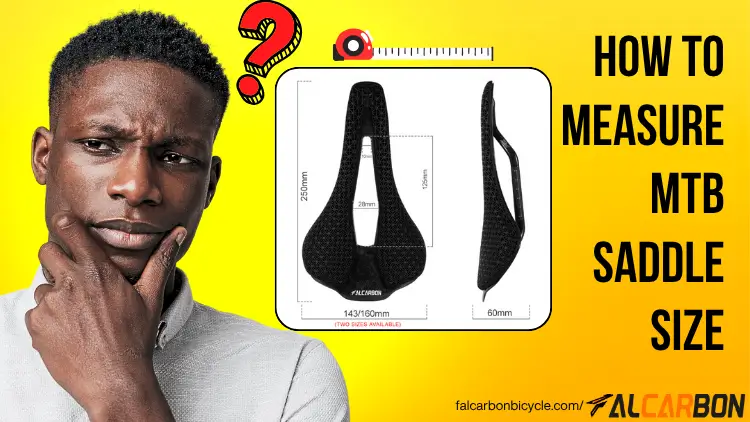
How to Measure MTB Saddle Size
In mountain biking, a comfortable and well-fitting bike saddle can reduce the fatigue of long rides and help you control the vehicle more efficiently. Especially on bumpy off-road sections, a suitable MTB (Mountain Bike) seat cushion can significantly enhance the riding experience.
However, many people only look at the appearance or brand when buying a seat cushion. Many riders pay more attention to factors such as suspension and tire pressure, but they overlook a crucial factor—whether the size of the bike saddle fits their ischial structure.
This article will systematically understand how to measure saddle size(MTB saddle size), the true meaning of the numbers, and how items such as carbon fiber bicycle saddles affect your fit.
Why Is Measure Saddle Width So Important?
Measuring the Bike Saddle enables us to have greater comfort and health when cycling. Improper Saddle can lead to symptoms such as sciatica and discomfort. Just like the shoes you wear on your feet, the principle that if the size is not right, your feet will get chafed and injured is the same. So, choosing the appropriate Bike Saddle size can better enable you to evenly distribute the weight support during cycling and reduce the pressure on sensitive parts.
Why Bike Saddle Size Matters?
An inappropriate size of the MTB Saddle will make your riding experience very poor on rough and steep roads. If the MTB Saddle is too narrow. Then your sciatic nerve will not receive enough support. Due to the insufficient area, it can lead to numbness, abrasions, and even cause compression and pain to your sciatic nerve. If the Saddle is too wide, when you pedal while riding, it may cause discomfort in the inner thighs, which will affect your riding comfort.
MTB Saddle Size Basics
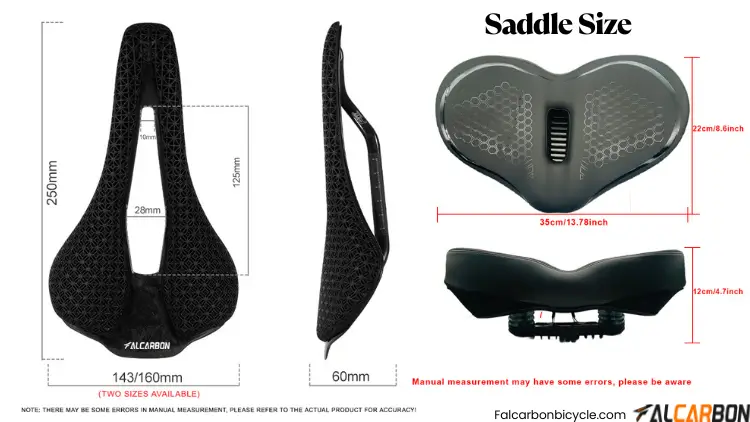
Before choosing and measuring the MTB Saddle size now, we need to first understand which key dimensions the “Saddle size” includes. Because Saddle size is not merely a simple number, but a precise match made after taking into account the cycling posture. style and body structure comprehensively. The following is the content of the reference data:
1. MTB Saddle Width:
This is the core size parameter of the Saddle, which directly determines whether your ischial bone can receive enough support. The sit bone width of each person is different, and so is the width of the saddle. Generally, the distance between your ischial bones is between 90 and 140mm, and it should be increased by about 20 to 40 mm on this scale. This is the appropriate width for your saddle.
If an inappropriate size of saddle is chosen, the following problems may occur:
- The Saddle is too wide: It will rub against the inner side of the thigh, affecting the smoothness of pedaling. When you are cycling, it may cause the saddle to be pinched.
- The Saddle is too narrow: If it is too narrow, your ischial bone will not fit the saddle well and will be suspended in the air. The pressure will be concentrated in your soft tissue areas. If you ride for a long time, it can cause numbness, tingling, and a feeling of pressure.
2. Bike Saddle Length.
Although the Bike Saddle Length is not as supportive as the width, it determines the space for you to move forward and backward on the saddle. It is very important in the style of mountain bike riding:
- The longer Bike Saddle is suitable for situations where the center of gravity shifts significantly forward and backward. such as long-distance cycling, climbing slopes, and dynamic adjustments in dangerous situations.
- The shorter MTB Saddle is popular in modern mountain bikes, especially in aggressive rides. Riders offer more leg movement for freedom of movement. while reducing friction at the front and enhancing the flexibility of technical movements.
3. MTB Saddle Shape
The appearance of the MTB Saddle is not only related to aesthetic design, but more importantly. It reflects the functional structure. Choosing the wrong shape can lead to a situation where, although the size is appropriate, the ride is still uncomfortable. So shape is also a very important aspect for cyclists. Here are some key shape options. Please check them out:
- Flat vs Curved:
- Flat Saddle: This type is suitable for cyclists who frequently change sitting postures and move back and forth on the saddle a lot.
- Curved Saddle: More suitable for cyclists with a firm sitting posture and stable pelvic Angle. such as long-distance forest road cruises or forest road endurance races.
- With Cutout vs Solid:
- With incision: Through the middle groove or through-hole position. It reduces the pressure in the perineum area and effectively prevents numbness.
- No incision: The structure is more stable and suitable for knights who pursue the most power output. But it has higher requirements for pelvic Angle control.
- Narrow Nose vs Wide Rear:
- Narrow nose: Reduces friction on the inner thighs and enhances flexibility in technical movements such as pressing down and turning.
- Wide tail: It offers better ischial support and is suitable for styles with stable sitting postures and long riding times.
The riding style and seat features of Saddle Air of different sizes and types will vary. Please refer to the following table:
| Riding Style | Recommended Saddle Features |
|---|---|
| Aggressive XC / Enduro | Narrow to medium width + short saddle + narrow nose + flat or slightly curved profile |
| Trail Riding | Medium width + mid-length saddle + cutout design + contoured (curved) shape |
| Touring / Long-Distance | Wide saddle + long profile + comfort-oriented design + extra padding or flexible saddle base |
How to Measure MTB Saddle Size – Step-by-step Guide
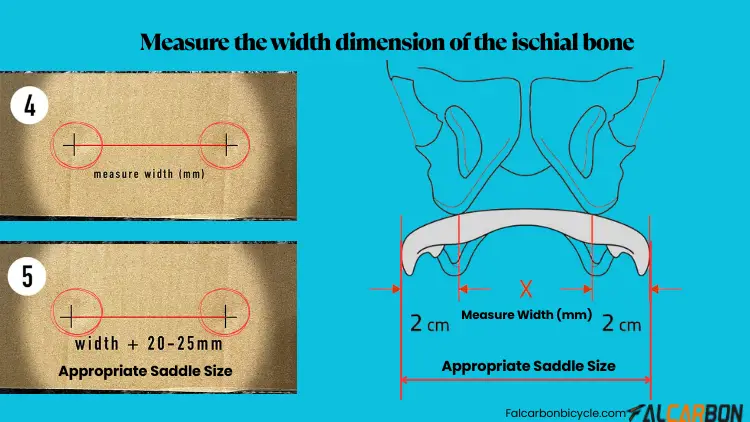
Measure MTB Saddle Size is actually about measuring the width of our ischium. First, we need to prepare the following tools:
- A corrugated cardboard
- A flat but padded surface (such as a yoga mat, a carpeted floor, or a chair with cushions)
- A ruler or tape measure
- Marker pen
Instructions for measuring the distribution of ischial width:
- Place the corrugated cardboard on a flat chair.
- Then sit upright on the chair, and lean forward at about 45 degrees to imitate your actual mountain bike riding posture.
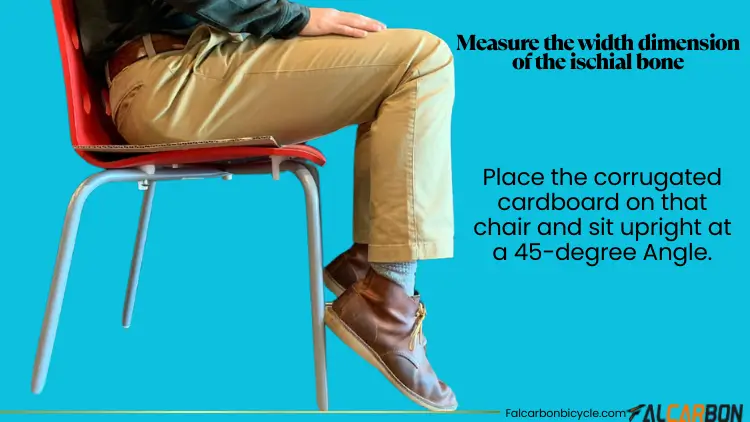
- Hold this position for 30 to 60 seconds. This is to allow your ischial bone to leave a clear mark on the cardboard.

- Then, when you stand up, you will find that there are two small oval depressions left on the corrugated cardboard – this is where your ischial bones come into contact.
- Please mark the two marked places with a marker pen for this matter.
- Then, use a ruler to measure the distance from one point of the indentation to another in millimeters from left to right. At this point, this is your ischial distance.

Note: The average ischial width for men is 60 to 160 millimeters, and for women it is 90 to 170 millimeters. Please add 20 to 25 millimeters on this basis to determine the size of your seat cushion. For instance, if your ischial width is 60 millimeters, you need to use a seat cushion that is 80 to 85 millimeters wide.
Related Articles:
- How to Measure Bike Handlebar Sizes Correctly
- How to measure bike handlebar width
- How to Measure Bike Stem Length
How to Match Saddle Width to Your Riding Style
Now that you have measured the ischial width, it’s time to apply this number and choose the appropriate saddle width, not only based on your body structure, but also on your riding posture and discipline. The ideal saddle width of a bike does not solely depend on the size of the ischium. Depending on your cycling posture, you may need to increase the width:
| Riding Posture / Style | Add to Sit Bone Width | Why |
|---|---|---|
| Aggressive Racing / XC (≈45°) | +20–30 mm | Lower torso angle means less contact area |
| Trail / Enduro (≈60°) | +30–35 mm | Balanced angle with moderate pressure |
| Touring / Upright Position (≈90°) | +35–40 mm | Upright posture needs more support area |
For female riders, the pelvic structure of women is usually wider, which means the size of the ischial bone is larger. So it might be more appropriate for us to choose a cushion with a large bottom size like the one shown in the following picture.

The MTB saddle size width matches the riding posture
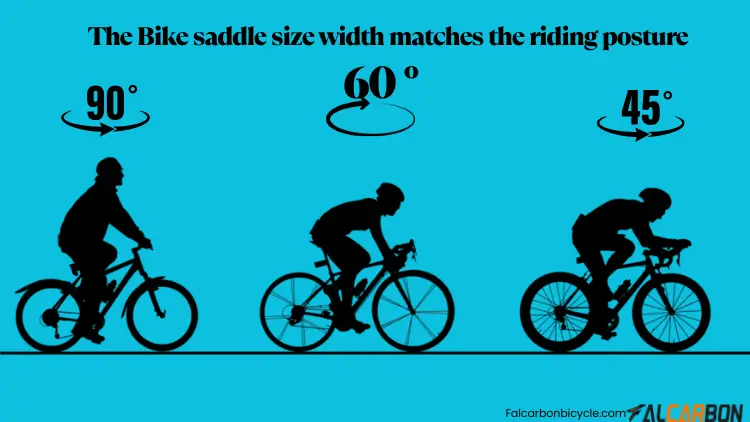
Your torso angle directly influences how much of your weight is supported by your sit bones versus soft tissue. Here’s how different torso angles affect saddle needs:
| Torso Angle | Position Description | Saddle Need |
|---|---|---|
| 90° | Upright (commuting/touring) | Wider, padded saddle with comfort-focused design |
| 60° | Moderate lean (trail) | Medium-width saddle, good pressure distribution |
| 45° | Aggressive lean (XC/racing) | Narrower, firmer saddle for efficient pedaling |
More Factors to Consider When Choosing MTB Saddle Size
The width of the MTB Saddle is of vital importance. When choosing the size of a bicycle saddle, also to the width, many factors need to be comprehensively considered to ensure comfort. performance, and health during long rides. The following are some key factors to consider when choosing a saddle:
- 1. Find the width of the ischial bone.
- Follow the measurement steps in the article or have a professional measure your ischial width at a bicycle shop. This will help you choose the right MTB Saddle size.
- 2. Cycling posture:
- As mentioned above, the Angle at which you rise and lean forward affects the way the ischium contacts the saddle.
- 3. Gender Differences:
- Men and women differ in the structure of the pelvis and the division of soft tissues. Women have wider pelvises and are suitable for a wider Saddle. The pelvis of men is relatively narrow, so a narrower or slotted design in the middle is suitable to reduce the pressure on the front.
- 4. Saddle length and nose shape:
- Standard-length saddle: Facilitates multi-position switching and is suitable for various road conditions.
- Short-nose saddle: Leaning forward for a more comfortable ride reduces pressure. and is suitable for triathlons and competitive riders.
- 5. Material and hardness selection:
- Thick and soft filling materials are suitable for short rides, while long rides may compress soft tissues. Fabrics made of harder or carbon fiber materials are lightweight and have good support. making them suitable for long-distance competitive cycling.
- 6. Test different types of MTB saddles
- Before deciding which MTB Saddle to choose, please do more tests. This is the best way to determine which saddle suits your riding style. The bicycle shop will offer saddle test rides and assist when you feel unwell. Just choose the one that suits you.
Carbon Bike Saddles – Do They Fit Differently?
What is a Carbon Bike Saddle?
The base, seat rail, or both of the Carbon Bike Saddle are made of carbon fiber. Carbon fiber material is lightweight and strong. Designed specifically for high-performance cyclists.
Advantages:
- Light in weight
- Strong rigidity
- The design is fashionable and durable
Who should use them?
- Riders who focus on improving performance (such as XC racers).
- Experienced cyclists have good adaptability to the saddle
- It is not ideal for beginners or weekend leisure cyclists
Related Articles: Best MTB Stem 2025: Top Picks for Every Rider.
FAQ
What are your sit bones?
The ischium is the two bones located in the pelvis, respectively on the sides of the buttocks. They directly support your weight and are a key factor in choosing the right MTB saddle size for cycling. When you feel pain or numbness in your buttocks while cycling, it is very likely caused by compression and restricted blood flow. So, a suitable saddle can also relieve this discomfort, so it is crucial to measure the size of the ischial bone.
How to choose the saddle size of a bicycle based on the width of the ischium?
After you have measured the distance between your ischial bones. You can choose the appropriate saddle size for yourself based on the following size codes.
1. S size: The ischial width is between 70 and 100 millimeters (the saddle width is 130 millimeters).
2. M size: The ischial width is between 100 and 130 millimeters (the saddle width is 140 millimeters).
3. L and XL dimensions: The ischial width is between 130 and 160 millimeters (the saddle width is 150 millimeters or wider).
How are MTB saddles measured?
The measurement of MTB saddles mainly determines the appropriate saddle width based on the ischial width. As the article states, you can use a piece of cardboard to measure the width of the ischial bone. Find two indentations left on the paper, and then measure the center distance between them. Immediately add about 20- 30 mm of width to this. This is the most suitable saddle width for you.
How do I know what size bike saddle I need?
Choose the right bike saddle size for yourself by measuring your ischium. Add about 20 millimeters to the measurement data of the ischial bone. For example, if the ischial width is 110 millimeters, it is recommended that the saddle width be 130 millimeters.
Is it better for a saddle to be too wide or too narrow?
The ideal saddle width is related to your pelvic geometry and riding posture. The narrower the bicycle seat, the more forward your body will lean. The wider the seat is, the more your legs will rub against your body during the pedaling process. So only the appropriate saddle width size is the best.
Considerations
In conclusion, the first task in finding the right MTB saddle size is to measure the width of your ischium. By measurement, you can choose the bike saddle that suits your riding posture, style, and personal preferences. When choosing the bike saddle, we also need to consider many factors. An important point that cannot be ignored is the shape and structural type of the saddle. If you are an advanced rider, you can also try the carbon fiber saddle. We believe it can more precisely match your fit, making your riding process smoother.